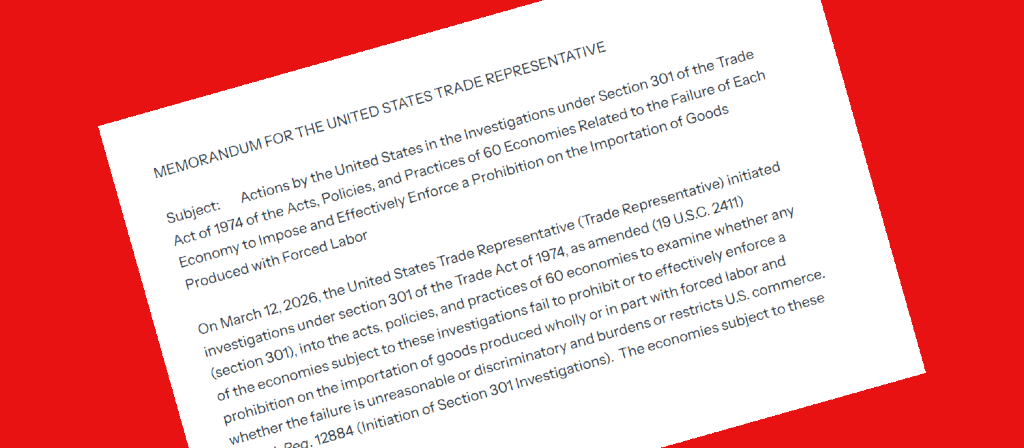

The first thing you need to know about Trump’s sweeping new tariffs is that they are based on a bald-faced lie. No one believes that Trump gives a damn about other countries’ steps to curb forced labor. That’s the ostensible legal justification. It’s absurd.
The second thing you need to know is that, like his insane “liberation day” tariffs, they are presumptively illegal and likely to be overturned. (Hey guess what? The legal group that successfully challenged Trump’s first round of tariffs has already filed suit.)
The third thing you need to know is they won’t work as advertised. Far from being paid by the countries exporting goods to the U.S., the tariffs will be paid for by the U.S. companies buying those goods, with much of the cost being passed on to American consumers.
So the fourth thing you need to know is that they will inevitably be inflationary.
The fifth thing you need to know is that they are highly unlikely to achieve Trump’s stated goal of boosting domestic manufacturing. Trump’s trade policy has been so chaotic, and is so unlikely to survive past his presidency, that CEOs would have to be crazy to dramatically shift their long-term plans based on anything he does at this point.
The sixth thing you need to know is that the tariffs won’t become a significant revenue generator if, as with his first round, the U.S. has to pay them back after they’re found to be illegal.
The seventh thing you need to know is that it’s not the president’s job to set tariff policy. The Constitution (Article 1, Section 8) grants that power exclusively to Congress, except when delegated to the president for specific reasons. Trump is making an extremely contorted argument based on a 1974 law that allows the president to issue tariffs if the government finds evidence that other countries engaged in unfair trade practices.
And the eighth thing you need to know is that Trump’s support of tariffs is not a rational response to economic conditions. His on-again off-again tariffs represent a massive and destructive disruption to the world’s economy that almost no one but Trump thinks is a good idea. He doesn’t even understand how tariffs work. He just loves them because they let him bully other countries.
So here’s my question: Did the mainstream media coverage last night and today tell you what you needed to know?
It did not.
For instance, Paul Wiseman and Mae Anderson, writing for the Associated Press, guilelessly reported the administration’s rationale that the subject countries “have inadequately enforced bans on goods produced by forced labor.”
The third paragraph quoted the U.S. trade representative saying “The United States has had a forced labor import ban for nearly a century, and rigorously enforces it; it’s well past time for our trading partners to do the same.”
It wasn’t until 12 paragraphs in that the authors offered readers the first hint of the administration’s extraordinary disingenuity, ascribed to “critics”:
“Today’s forced labor justification is too convenient to be taken seriously,” said U.S. Rep. Richard Neal of Massachusetts, the top Democrat on the House Ways and Means Committee. “Forced labor is a real and pervasive problem in our supply chains and demands serious enforcement. It should never be cheapened into a pretext for a tariff policy built on dubious legal theories and personal grievances.’’
The article also clearly implied that the new tariffs would survive legal challenges, calling them “more durable” than the first ones on account of the 1974 law that “permits the president to impose import taxes and other sanctions against countries found to engage in ‘unjustifiable,’ ‘unreasonable’ or ‘discriminatory’ trade practices.”
But what is unjustifiable, unreasonable or discriminatory about the practices of the trading partners that happen to account for 99% of U.S. imports? They don’t even ask.
The Wall Street Journal headlined its main story: “Trump Unveils New Tariffs Designed to Withstand Legal Scrutiny.” Gavin Bade wrote, with no caveats: “Once in place, the levies can remain indefinitely and be unilaterally altered by the president.”
Politico, unsurprisingly, did pure stenography. Oliver Ward, Megan Messerly and Daniel Desrochers dutifully reported:
The new duties, which range from 10 to 12.5 percent, follow a five-month investigation into trading partners’ efforts to root out products made with forced labor from their supply chains and are set to take effect just as a temporary global 10 percent tariff expires.
“Today’s action is the most sweeping international labor rights action the United States has ever taken — that any country has ever taken,” said a senior administration official, granted anonymity to preview the new tariffs. “It encourages stronger labor rights enforcement abroad, it will restore fairness in the global market for American workers, and it incentivizes our trading partners to join the United States in eliminating forced labor from global supply chains.”
And what about the investigation that allegedly justifies the new tariffs? The results were published in a June report, and it’s a bunch of preposterous boilerplate legalese that signifies nothing. It provides no evidence that any of the countries failed to adequately enforce a ban on goods made with forced labor, just a bunch of suppositions. There is certainly no evidence of actual forced labor. It’s a farce.
The Washington Post at least had the decency to use air quotes in its headline: “Trump sets new tariffs to punish use of ‘forced labor,’ replacing expiring import taxes.”
But David Lynch’s lead was incredibly weak:
The Trump administration imposed new tariffs that it bills as combating forced labor but that critics say are part of the president’s broader campaign to reduce Americans’ reliance on imports.
The first part of the sentence is objectively a lie that needed to be immediately refuted. The second part wildly understates what “critics” are actually saying. But there was no refutation anywhere. Instead, Lynch carried Trump’s water:
Administration officials who briefed reporters on the condition that they not be identified said Thursday’s action grew out of Trump’s long-standing opposition to involuntary labor.
And then again, later:
The senior administration officials said the president’s concern over forced labor was genuine.
Give me a break.
As usual, the most accurate interpretation of the news on the Post website came in the AI summary of reader comments:
The comments express skepticism and criticism of President Donald Trump’s stance on forced labor, with many questioning the sincerity of his opposition given his past business practices. There is significant disapproval of his tariff policies, which are seen as economically damaging and potentially hypocritical, as they may not effectively address forced labor issues. Additionally, commenters express concern over the broader implications of Trump’s foreign and domestic policies, suggesting they harm international relations and the U.S. economy.
The New York Times did a somewhat better job, with Ana Swanson casting the new tariffs as Trump’s “latest effort to put in place an expansive protectionist policy that has been repeatedly challenged in court.”
And the Wall Street Journal’s Greg Ip provided some useful context in his analysis:
When the Supreme Court struck down Trump’s main tariff weapon in February, the president’s trade war seemed destined to enter a less capricious and more constrained phase.
To Trump, though, court rulings are road maps, not roadblocks. February’s court ruling simply rerouted him to tools the court hadn’t explicitly prohibited. And fortunately for Trump, Congress has over the years scattered many such tools through the law books, many largely forgotten or unused.
He continued:
Tariffs are central to Trump’s vision of presidential power: a catalyst for national rejuvenation, a source of revenue and an all-purpose crowbar to force allies and adversaries alike to do what he wants, from lowering their own trade barriers to surrendering territory.
This vision is at odds with the Constitution, which gives Congress authority over tariffs and taxes, except when delegated to the president for specific reasons. It also breaks with the bipartisan consensus in Congress that trade policy should enhance strategic bonds with allies and neighbors.
The Washington press corps is failing at its most important job. It is not telling you what you need to know.